Purchase orders say what to buy and when. A quality agreement says how quality will be ensured — and what happens when it is not. Without one, every problem becomes a negotiation: Who pays for sorting? Can the supplier change a material? How quickly must they respond? Writing these rules down before the first issue makes problems faster and less emotional to solve.
What it typically covers
| Section | Content |
|---|---|
| Scope and documents | Which products, which documents define them, precedence |
| Approvals | First article, samples, when re-approval is needed |
| Inspection and records | What is inspected, sampling, how long records are kept |
| Change control | Supplier must request approval before changing materials, processes, sub-suppliers or locations |
| Nonconformance | Notification, containment, sorting, rework, costs |
| Corrective action | Response times, format (e.g. 8D), verification |
| Traceability | Lot and date codes, material certificates |
| Audits | Right to audit the supplier and key sub-suppliers |
Practical clauses
- Notification of suspected defects within a defined time, even after shipment
- Containment of suspect stock in the factory, in transit and at your warehouse
- Who pays sorting, rework, replacement and extra freight for confirmed supplier defects
- Response time for an initial corrective action report
- No shipment of nonconforming parts without written deviation approval
- Retention of samples and records for an agreed period
Adapting the agreement to supplier size
A large contract manufacturer will usually have its own quality system and may propose its own agreement template. A small workshop may not have formal procedures at all. For smaller suppliers, focus on the essentials: approval of first articles, notification of changes, handling of defects and record keeping. Help them with simple templates for inspection records and corrective action reports.
Review the agreement once a year, or when the product or supplier changes significantly. Update it with lessons from issues that occurred. Over time, the agreement becomes a record of how the partnership works — and a useful guide when new people join on either side.
Sub-suppliers
Many quality problems start one level down: a plater, a PCB fabricator or a resin distributor. The agreement should make the supplier responsible for controlling their sub-suppliers and require notification before changing them. For critical processes, ask for a list of sub-suppliers and the right to audit them together with your supplier. Clear responsibility at this level prevents finger-pointing when a defect originates outside the main factory.
Keeping it practical
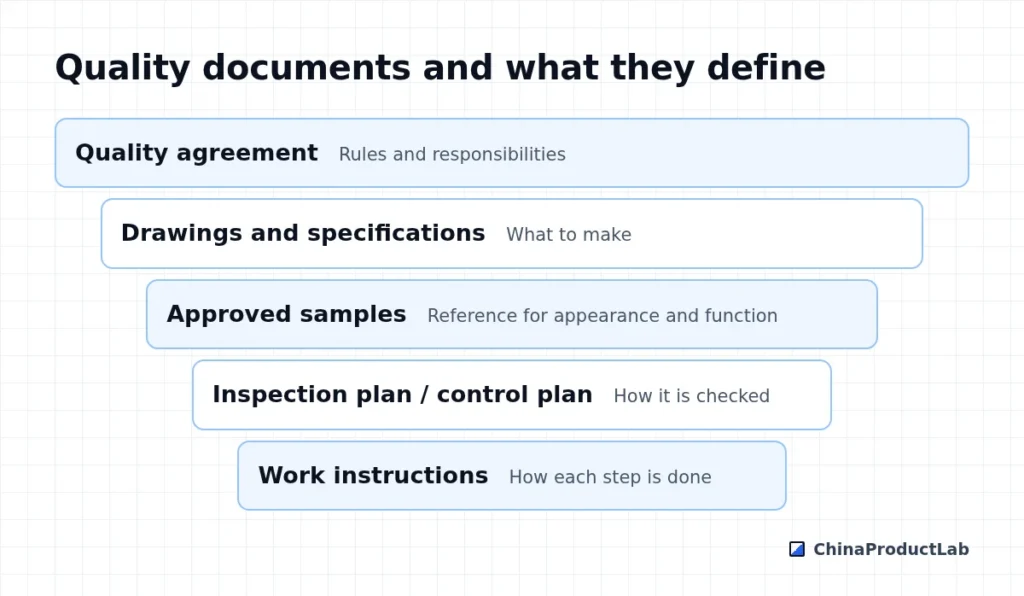
A short, clear agreement that both sides understand works better than a long template copied from a large company. Translate it if needed, walk through it with the supplier’s quality manager, and adapt it to the supplier’s size. Then use it: when the first issue occurs, follow the agreed process — that is what makes the document real.
Related: golden samples, engineering change management and supplier audits.