Soft-touch coating feels premium on day one and sticky or peeling a year later. Coatings change how a product looks and feels, but they add cost, process steps and failure modes. Specify them with tests, not adjectives.
Coating types
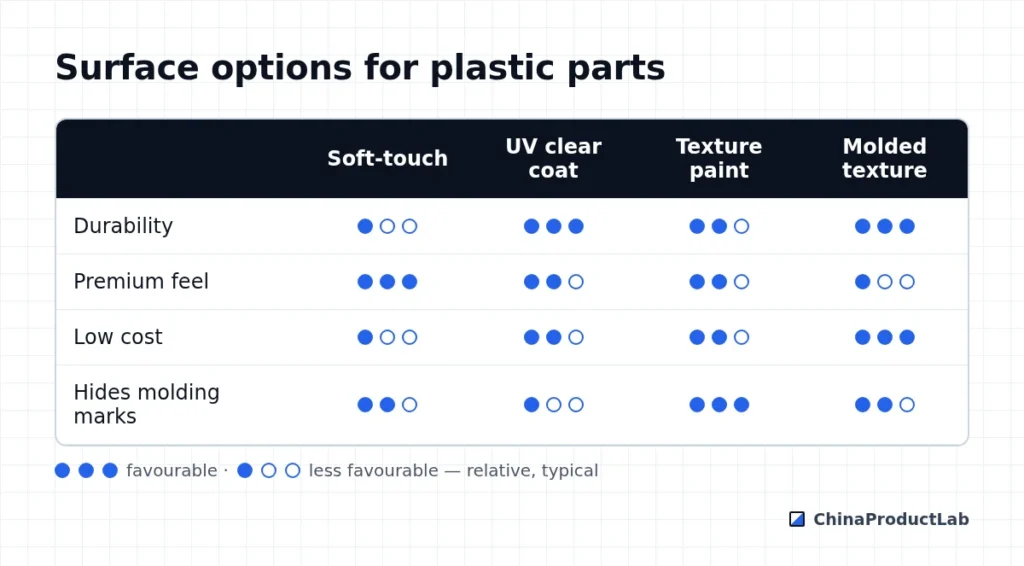
| Coating | Effect | Watch out for |
|---|---|---|
| Soft-touch (rubber paint) | Velvety feel, low gloss | Wear, stains, aging and stickiness; choose a durable formulation |
| UV-cured clear coat | High gloss or matte, scratch resistance | Needs line-of-sight curing; thickness control |
| Texture / metallic paint | Hides molding marks, special looks | Color matching between batches and parts |
| Molded texture (no paint) | Durable matte or grain surface | Defined in the mold; draft angle depends on texture depth |
Specification and tests
- Color (Pantone or master sample) and gloss level with a measurement method
- Adhesion test (cross-hatch tape test)
- Abrasion / rub test with defined cycles
- Chemical resistance: alcohol, hand cream, sunscreen, sweat as relevant
- Aging test (heat and humidity) for soft-touch coatings
- Cosmetic standard for dust, runs, orange peel and overspray
Questions to ask the coating supplier
- Which coating system (brand and type) is used, and does it have test data for your substrate?
- What is the coating thickness and how is it measured?
- How is the masking done for areas that must stay uncoated (contacts, sealing surfaces)?
- What is the reject rate for dust and defects, and how are rejects handled?
- What tests are run per batch, and can results be shared?
Painting is often done by a separate workshop. Ask who does it, inspect the painting line if possible, and include the coating tests in your inspection plan. Consider also the color match between coated and uncoated parts in the same product — they age differently.
Coating or molded finish?
Before choosing a coating, check whether a molded surface can achieve the goal. Mold textures, from fine matte to leather-like grain, are applied to the tool once and then reproduced on every part without extra steps. Pre-colored resins avoid painting entirely. Soft-touch feel can sometimes be achieved with an overmolded TPE instead of a coating, with much better durability.
Coatings still make sense for special effects, high gloss, metallic looks, scratch resistance or a uniform appearance across parts made from different materials. In that case, consider the whole life of the product: coatings on frequently touched surfaces wear first at edges and corners. Rounding edges, avoiding coatings on high-wear areas and choosing a darker color that hides wear can extend the product’s appearance. Ask the supplier for references of products with the same coating that have been in use for some time.
Approving the first batch
Approve coated parts with physical master samples for color, gloss and feel, and keep them protected from light and handling. Check the first production batch against the masters under the same lighting, and repeat the adhesion and rub tests on parts from the line, not only on samples prepared for approval.
Practical tips
Material and mold-release agents affect adhesion; some plastics need primers or plasma treatment. Where possible, molded texture or a pre-colored resin avoids painting entirely — usually cheaper and more durable.
Related: enclosure plastics, product marking and limit samples.