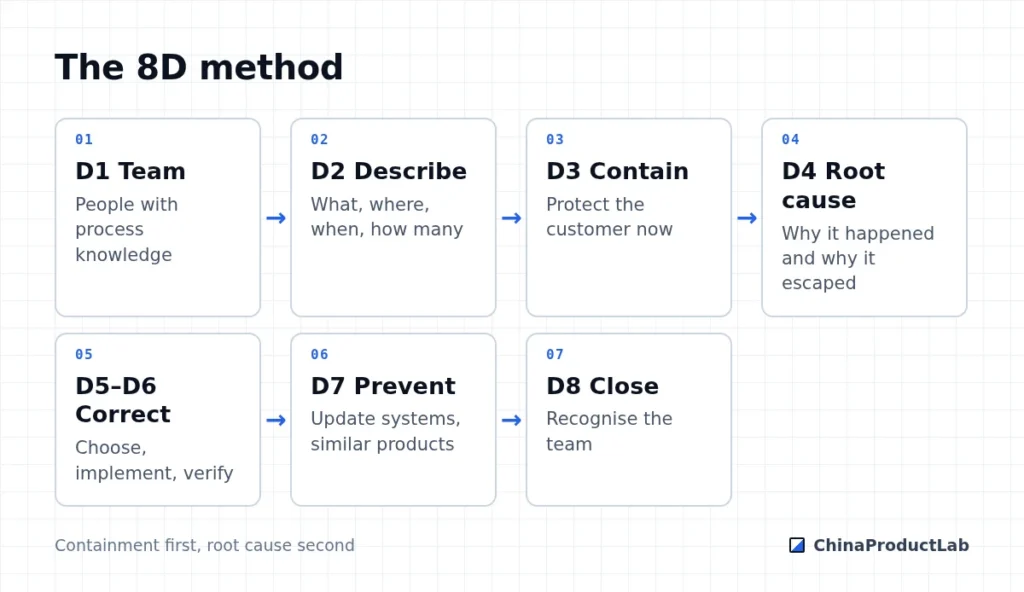
A batch arrives with defects. The supplier apologises, promises to “strengthen inspection” — and three months later the same defect returns. The 8D (eight disciplines) method is a structured way to solve problems so they stay solved. Asking for an 8D report and knowing how to review it turns complaints into lasting improvements.
The eight disciplines
Two root causes, not one
A good 8D answers two questions: why the defect was made, and why it was not detected. Fixing only detection (“100% inspection”) leaves the cause in place; fixing only the cause leaves the next escape undetected. Tools such as 5 Whys and fishbone (Ishikawa) diagrams help get past the first, obvious answer.
| Weak root cause | Better root cause |
|---|---|
| “Operator mistake” | Fixture allows the part to be loaded the wrong way |
| “Machine problem” | Worn locating pin not covered by maintenance plan |
| “Inspection missed it” | Gauge cannot detect the defect; sampling plan too small for this feature |
Reviewing a supplier’s 8D
- Is the problem described with data, photos and quantities?
- Was suspect stock contained everywhere — factory, transit, your warehouse?
- Is the root cause verified, for example by reproducing and removing the defect?
- Do corrective actions change the process, not just add inspection?
- Is effectiveness verified with data from later production?
- Are similar parts and processes checked (D7)?
Containment in practice
Containment protects your customers while the root cause is investigated. It must cover every location where suspect parts may be: the supplier’s finished goods, work in progress, goods in transit, your warehouse and sometimes your customers. Define how suspect stock is identified — by date code, batch or serial number — and how it is sorted: by whom, against which criteria and with what records.
- Mark sorted good parts clearly so they are not mixed with unsorted ones
- Record quantities checked, rejected and accepted
- Continue enhanced checks until corrective action is proven effective
- Agree on costs for sorting and replacement per the quality agreement
Learning across products
The D7 step — preventing recurrence — is where most organisations fall short. Ask whether the same failure could occur on other parts, lines or products, and whether design guidelines, PFMEAs or inspection plans should change. Keep a simple log of closed 8Ds with root causes; reviewing it before new projects helps avoid repeating past mistakes.
Making it work
Agree on 8D (or a similar format) in the quality agreement, with response times for containment and for the full report. Provide clear complaint information — samples, photos, quantities, batch numbers. Close the 8D only when follow-up batches show the defect is gone. Suppliers take the process more seriously when they see you track and verify it.
Related: quality agreements, quality control in China and injection molding defects.