
Carbon steel is strong and inexpensive, but it rusts. Stainless steel resists corrosion, but its surface still needs the right treatment. The finish decides how long parts survive in use and storage, whether threads still fit, and what color the parts are. “Zinc plated” alone is not a specification — thickness, passivate type and post-treatments matter.
Common finishes
| Finish | For | Characteristics |
|---|---|---|
| Zinc plating + passivate | Carbon steel | Economical; corrosion depends on thickness and passivate (clear, yellow, black) |
| Zinc-nickel | Carbon steel | Higher corrosion resistance; common in automotive |
| Electroless nickel | Steel, aluminum | Uniform thickness, wear resistant, good for complex shapes |
| Black oxide + oil | Steel | Thin, black look; limited corrosion protection |
| Powder coating / e-coat | Steel parts and sheet metal | Thick, colored protection; masking needed for threads and contacts |
| Passivation | Stainless steel | Removes free iron, restores the passive layer; no visible change |
Matching finish to environment
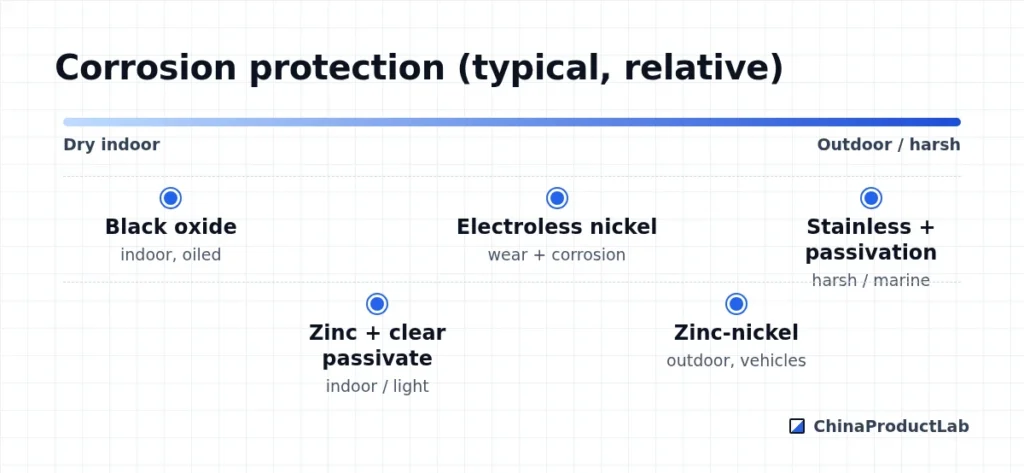
For critical parts, specify a test such as neutral salt spray (e.g. ISO 9227) with a required duration to first white or red rust. Salt spray hours are useful for comparing finishes and controlling suppliers, but they do not directly predict years of real-world life.
Specification checklist
- Finish type and thickness range (µm)
- Passivate or top-coat type and color
- Corrosion requirement and test method for critical parts
- Threads: plate before or after threading, and thread class allowance
- Masking areas (electrical contacts, precision bores)
- Hydrogen embrittlement relief baking for high-strength steels and springs
- Restricted substances — e.g. hexavalent chromium passivates are restricted in many markets
Working with platers
Plating quality depends heavily on cleaning, racking and bath control. Parts with blind holes and deep recesses can trap chemicals or receive thin coatings inside. Discuss part geometry with the plater: drain holes, racking points and areas where contact marks are acceptable. Small parts are often barrel-plated, which is economical but can mark cosmetic surfaces.
- Thickness report per batch at defined measurement points
- Salt spray test results at an agreed frequency for critical parts
- Adhesion checks (bend or tape test) for coatings
- Declaration of compliance with restricted-substance rules for the passivate and plating chemistry
- Packaging that protects the finish in transit
Plating colors such as black zinc or yellow passivate vary between platers. If appearance matters, keep approved samples and specify the color reference.
Storage and transport
Even well-plated parts can corrode during sea freight, when humid, salty air condenses inside containers. Use sealed bags with desiccant or volatile corrosion inhibitor packaging for steel parts, and avoid packing parts that are still warm or damp from processing. Inspect a sample on arrival for white or red rust, and keep photos of any findings for the supplier.
Common problems
Plating adds thickness, so tightly toleranced threads and bores can bind — plan allowances or mask them. High-strength fasteners and springs can crack after plating if not baked to relieve hydrogen. Plating is frequently subcontracted: ask your supplier which plater is used, and request thickness reports per batch.
Related: aluminum finishes, aluminum vs steel vs stainless and sheet metal fabrication.