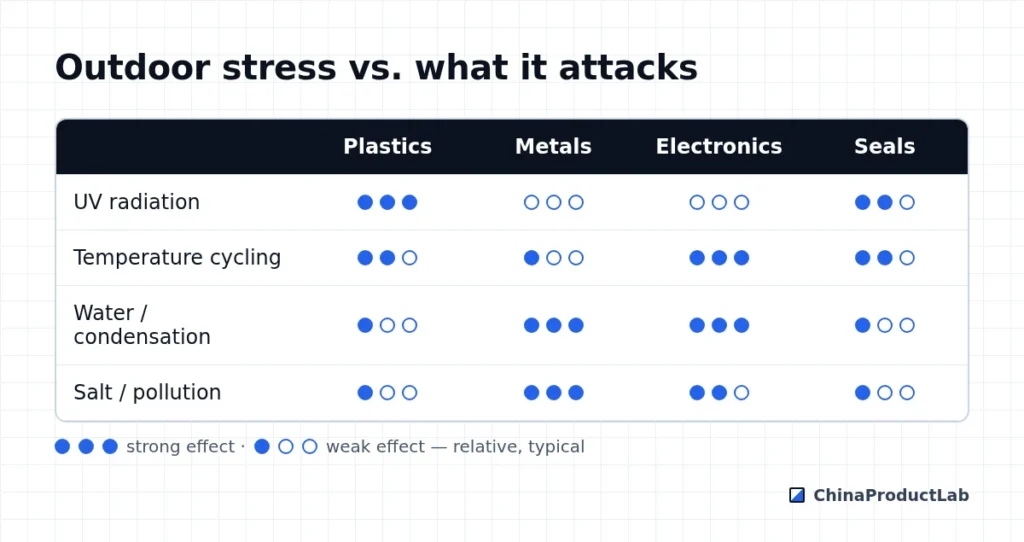
Sunlight fades and embrittles plastics, temperature swings pump moisture into enclosures, and salty air corrodes fasteners. A product designed indoors and placed outside can look old within one summer and fail within two. Outdoor durability comes from material choices, enclosure details and testing that simulates years of exposure.
The outdoor stresses
Materials
- UV-stabilised resins (e.g. ASA instead of ABS, UV-stabilised PC or PP)
- Darker or pigment-stable colors fade less visibly; ask for weathering data
- Stainless steel grade suited to the environment (316 near the coast)
- Fasteners compatible with the parts they join to avoid galvanic corrosion
- Seals and gaskets in UV- and ozone-resistant elastomers (e.g. EPDM, silicone)
- Coatings and finishes rated for outdoor exposure
Enclosure details
Sealed enclosures breathe as they heat and cool. Without a vent, pressure differences pull moist air past seals, and condensation forms inside when temperatures drop. A pressure-equalising membrane vent lets air move while blocking water and dust. Place drains and drip edges so water cannot pool on seals, and orient openings downward.
| Test | Simulates |
|---|---|
| Accelerated UV / xenon-arc weathering | Sunlight on plastics and finishes |
| Temperature and humidity cycling | Day-night and seasonal changes, condensation |
| Salt spray / cyclic corrosion | Coastal and road environments |
| Ingress (IP) testing | Rain, jets, immersion |
Galvanic corrosion and fasteners
When two different metals touch in the presence of moisture, the less noble one corrodes faster. Aluminum housings with stainless steel screws are a common example. Reduce the effect by choosing compatible materials, isolating them with washers or coatings, and keeping water from collecting at the joint. Coated or plated fasteners compatible with aluminum may be better choices than bare stainless in some cases.
- Check every metal pair in the outdoor product
- Avoid water traps at joints and fasteners
- Use sealants or isolating washers where dissimilar metals meet
- Specify fastener coatings suited to the environment
- Inspect test units after corrosion testing at all joints, not just surfaces
Labels, prints and seals
Small details fail first outdoors: printed logos fade, adhesive labels peel, and rubber seals crack. Use UV-resistant inks or laser marking, outdoor-rated label materials and adhesives, and seal materials with good ozone resistance. Test these items together with the product in weathering tests, because a product that works but looks faded and unlabeled after a year still disappoints customers.
Documenting the outdoor specification
Write the outdoor requirements into the product specification: climate zones, UV exposure, temperature range, salt exposure and expected service life. Suppliers can then propose suitable materials and finishes, and test plans can be linked to clear targets instead of general wishes such as “weatherproof”.
Testing realistically
Accelerated tests compress years into weeks, but they do not translate exactly into service life. Use them to compare materials and catch weaknesses, and supplement with real outdoor exposure of samples in the target climate whenever the schedule allows.
Related: enclosure plastics, steel finishes and sports and outdoor products.